
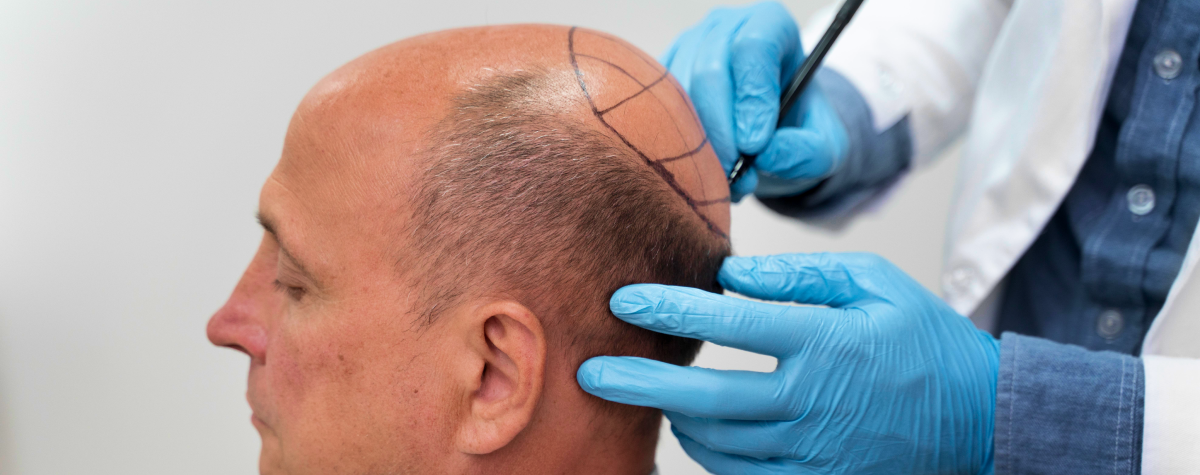
Hair loss is a common concern affecting millions of people across the UK. Genetics, hormonal changes and ageing are the primary causes, but lifestyle factors such as stress, diet, and scalp health can also contribute. Hair thinning and balding can impact confidence, self-esteem and overall wellbeing. Modern hair restoration techniques provide effective, medically guided solutions for a range of hair loss patterns. At Regrow Hair Centre, we offer advanced DHI and FUE hair transplant techniques, alongside non-surgical treatments including PRP, ACP , PRF therapies, and laser hair growth, providing a comprehensive approach tailored to each patient.
Understanding the differences between DHI and FUE is essential for choosing the technique that best suits your hair loss stage, donor area availability, and long-term goals. This guide provides an in-depth look at both procedures, compares their advantages and limitations, and helps you make an informed decision.
What Causes Hair Loss?
Before considering a transplant, it is important to understand why hair loss occurs. The main factors include:
- Genetics: Male and female pattern baldness is inherited and the most common cause.
- Hormonal changes: Androgenic hormones can shrink hair follicles over time.
- Ageing: Hair naturally thins as we age, with slower growth cycles.
- Lifestyle factors: Stress, poor nutrition, and inadequate scalp care can accelerate shedding.
- Medical conditions: Thyroid disorders, autoimmune diseases, and certain medications may contribute.
Recognising the underlying cause helps determine whether surgical or non-surgical hair restoration is the most suitable option.
What Is FUE Hair Transplant?
Follicular Unit Extraction (FUE) is a precise hair transplant technique widely used for restoring natural hair density. Individual hair follicles are harvested from a donor area, typically at the back or sides of the scalp, using specialised micro-punch tools. Once extracted, the follicles are preserved in a nutrient solution until implantation.
Advantages of FUE:
- Minimal scarring: Tiny circular marks are left behind and heal quickly.
- Suitable for large areas: Effective for covering the crown, frontal region, and extensive thinning.
- Long-term natural results: Once implanted, follicles grow like natural hair.
Considerations:
- Session duration: FUE can take several hours depending on the number of grafts required.
- Multiple sessions: Extensive hair loss may require more than one procedure.
- Donor hair planning: Care must be taken to avoid overharvesting.
FUE is particularly suitable for patients seeking coverage over larger areas of the scalp while maintaining natural hair density.
What Is DHI Hair Transplant?
Direct Hair Implantation (DHI) is an advanced hair transplant technique that allows hair follicles to be implanted directly into the scalp using a specialized Choi pen. This method gives the surgeon precise control over the angle, direction and depth of each follicle, which is crucial for creating a natural hairline and denser appearance.
Advantages of DHI:
- Precision placement: Hair follicles are implanted with exact control over direction and angle.
- Faster healing: Reduced scalp trauma means quicker recovery.
- Ideal for frontal hairline restoration: Perfect for refining smaller areas or enhancing previous transplants.
Considerations:
- Session duration: For larger areas, DHI can be time-consuming.
- Not always necessary for extensive coverage: Best suited for targeted areas requiring precision.
DHI allows for a more concentrated density and natural hairline, making it particularly suitable for patients focusing on frontal restoration or refining previous hairline work.
Key Differences Between DHI and FUE
Both FUE and DHI achieve natural, long-lasting results, but the differences can influence which technique is most appropriate.
|
Feature |
FUE | DHI |
|
Graft Extraction |
Individual follicles removed and implanted separately | Extracted and implanted directly with Choi pen |
|
Hairline Precision |
Good with careful planning |
Very high, precise angle and direction |
|
Recovery |
Moderate, small punctures heal within a week |
Slightly faster, less trauma to scalp |
|
Suitable Area |
Large coverage including crown and frontal region |
Targeted areas, frontal hairline refinement |
| Session Duration | Several hours depending on grafts | Longer for large areas, faster for small areas |
The choice depends on clinical evaluation, donor hair availability, hair loss stage and long-term planning. Both techniques benefit from careful surgeon assessment to maximise density and achieve natural results.
How to Choose the Right Technique
Several factors influence whether DHI or FUE is more suitable:
- Donor hair availability: Adequate donor density is essential for sustainable results.
- Hair loss stage: Early intervention preserves donor strength and widens treatment options.
- Area requiring coverage: FUE is efficient for larger areas; DHI excels at precision placement.
- Lifestyle considerations: Work schedule, social activities, and recovery time may influence choice.
- Combination options: In some cases, non-surgical therapies like PRP or laser hair growth can complement transplant procedures for enhanced results.
At Regrow Hair Centre, every patient undergoes a thorough assessment to ensure the most suitable method is chosen for long-term success.
Aftercare and Expected Results
Proper aftercare is vital for successful hair transplantation. Key guidance includes:
- Avoid scratching or picking at the scalp for the first 7–10 days.
- Protect the scalp from sun exposure and rigorous physical activity.
- Follow prescribed medications and shampoo routines to reduce infection risk and promote healing.
- Attend follow-up appointments to monitor follicle growth and address concerns.
Hair typically undergoes a shedding phase before regrowth begins. Noticeable growth usually starts within three to four months, with full results becoming evident after twelve months. Complementary treatments such as PRP or laser hair growth may support faster follicle stimulation and improved density during recovery.
Benefits of Early Assessment
Early consultation is crucial for optimal outcomes. By assessing hair loss at an earlier stage, patients can:
- Preserve donor hair for future procedures.
- Combine non-surgical and surgical treatments effectively.
- Plan long-term strategies for natural hair density and coverage.
Individuals in Shenfield, Brentwood, and across Essex benefit from a structured evaluation to determine the right technique, timing, and complementary therapies for their specific needs.
Both DHI and FUE hair transplant techniques offer highly effective, permanent solutions for hair loss. The most suitable method depends on individual hair loss patterns, donor hair strength, lifestyle, and long-term goals. A personalised assessment ensures optimal technique selection, maximises results, and supports sustainable hair density.
If you are considering hair restoration in Shenfield, Brentwood, or elsewhere in Essex, arranging a professional consultation is the first step towards achieving natural, long-lasting results.